★★★★★ 5 (89 Google reviews) — View on Google Maps → Planning to play? See our guide on How to Book a Golf Course in Japan as a Foreigner.
If you’ve only played golf outside Japan, the mid-round lunch will catch you off guard.
Not in a bad way. In the best possible way.
In most countries, the “turn” means a hot dog, maybe a sports drink, and a quick look at the leaderboard before you head to the 10th tee. In Japan, it means sitting down to a full restaurant meal — proper food, proper service, proper plates — in the middle of your round. It’s one of the most distinctly Japanese aspects of the game, and once you’ve experienced it, you’ll wonder why the rest of the world hasn’t caught on.
How It Works
Japanese golf courses split the round into two halves: the front nine and the back nine, with a mandatory lunch break in between. This isn’t optional. The course schedules it. Everyone stops, goes inside, eats, and then returns to the first tee of the back nine.
The break typically runs between 45 minutes and an hour. Long enough for a real meal. Long enough to sit down, take off your shoes (in traditional clubhouses), review the front nine with your group, and reset mentally for the afternoon.
In many clubs, you’ll order your lunch before you tee off — at check-in or on the way to the first tee. Your food arrives at the clubhouse timed to your turn, so there’s no waiting. The system is efficient in a way that only Japan could engineer.
What You’re Actually Eating
This is where the Western expectation and the Japanese reality diverge most sharply.
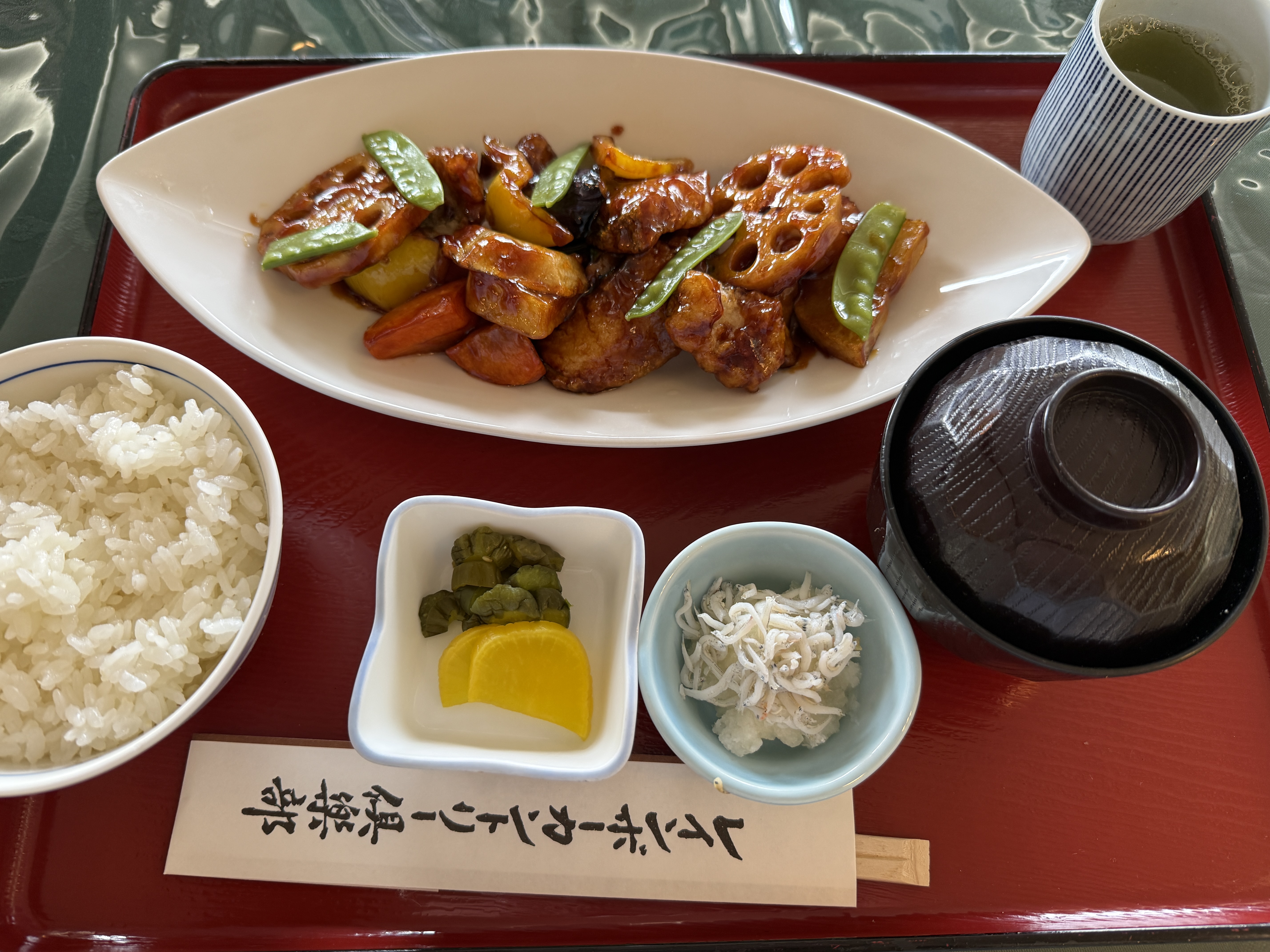
The food at Japanese golf clubhouses is genuinely good. Not “good for a golf course” — just good. Most courses offer a set menu (定食, teishoku) built around Japanese cuisine: rice, miso soup, a main dish, and several small sides. The presentation is careful. The portions are substantial. It doesn’t feel rushed or institutional.
Common dishes you’ll find on the lunch menu:
- Katsu curry — breaded pork cutlet over Japanese curry rice, one of the most popular golf lunch orders in the country
- Soba or udon — hot noodles in dashi broth, lighter than curry but deeply satisfying
- Grilled fish set — typically mackerel or salmon, with rice and miso soup
- Tempura set — seasonal vegetables and seafood, fried to order
- Kaiseki-style sets — at higher-end clubs, a multi-course meal that rivals what you’d find at a proper restaurant
The quality varies by club, but the baseline is consistently higher than you’d expect. Even modest courses tend to take their kitchen seriously.
The Beer Question
Yes, people drink beer at the golf course lunch in Japan. Not everyone, and not excessively — but a cold beer (or two) between the front and back nine is completely normal and accepted without judgment.
Non-alcoholic beer is also widely available for those driving or who prefer to keep a clear head for the back nine. The choice is yours and nobody will think less of either decision.
The group dynamic around lunch drinks is part of the social fabric of Japanese golf. It loosens the conversation, fills the time naturally, and adds to the sense that this is an experience, not just a game.
The Social Function
In Japan, golf is as much about relationships as it is about the game. The lunch break is where a significant portion of that relationship-building happens.
Business golf (setsai golf, 接待ゴルフ) is a real institution — clients, colleagues, and partners spend the day together, and the lunch table is where conversations deepen, deals are discussed, and genuine connections form. The 45 minutes inside are often as important as the four hours outside.
For visiting golfers playing with Japanese partners or hosts, understanding this is useful. The lunch isn’t a logistical break. It’s part of the day’s agenda. Engage, ask about the food, share impressions of the front nine, and let the conversation find its own pace.
Practical Tips for First-Timers
- Order early. Many courses ask you to choose your lunch at check-in. If you’re not sure what to get, katsu curry is a reliable choice almost everywhere.
- Remove your shoes. In traditional clubhouses, you’ll leave your golf shoes at the entrance and enter in socks or slippers. It happens naturally — watch what others do.
- Don’t rush. The schedule is built around the lunch break. You won’t miss your tee time by eating properly.
- The meal is usually included — or available at a modest surcharge — in your day fee. Check when booking.
- Dessert happens. A small dessert often comes with the set. Accept it.
Why It Makes Golf Better
Eighteen holes of golf is a long day. The mental concentration required — decision after decision, shot after shot — is genuinely taxing in a way that sneaks up on you. The Japanese approach of building a proper rest into the middle of the round isn’t just tradition. It works.
You’ll play the back nine better for having eaten well. The group will be more relaxed. The afternoon will feel like a fresh start rather than a continuation of a long slog.
It’s one of those aspects of Japanese golf culture that seems like a small thing until you’ve experienced it — and then you wonder how anyone plays 18 holes without it.
Planning a golf trip to Japan? Combine your rounds with local food and cultural experiences through MagicalTrip — English-guided tours led by locals across Tokyo, Kyoto, Osaka, and beyond.
Powered by Rakuten GORA — Japan’s largest golf booking site
🏨 Staying near Japan?
Find the best hotel deals for your golf trip.
⛳ Planning a golf trip to Japan?
I’m a Japan-based airline pilot and golfer. I offer 1-on-1 consulting to help you plan your trip and find the right gear.
Enjoyed this article?
Kai & Chika — the golf guides behind this site — are available as LINE stickers.
🎌 Get the LINE Stickers →